What should a Saudi business look for in a web designer's portfolio?
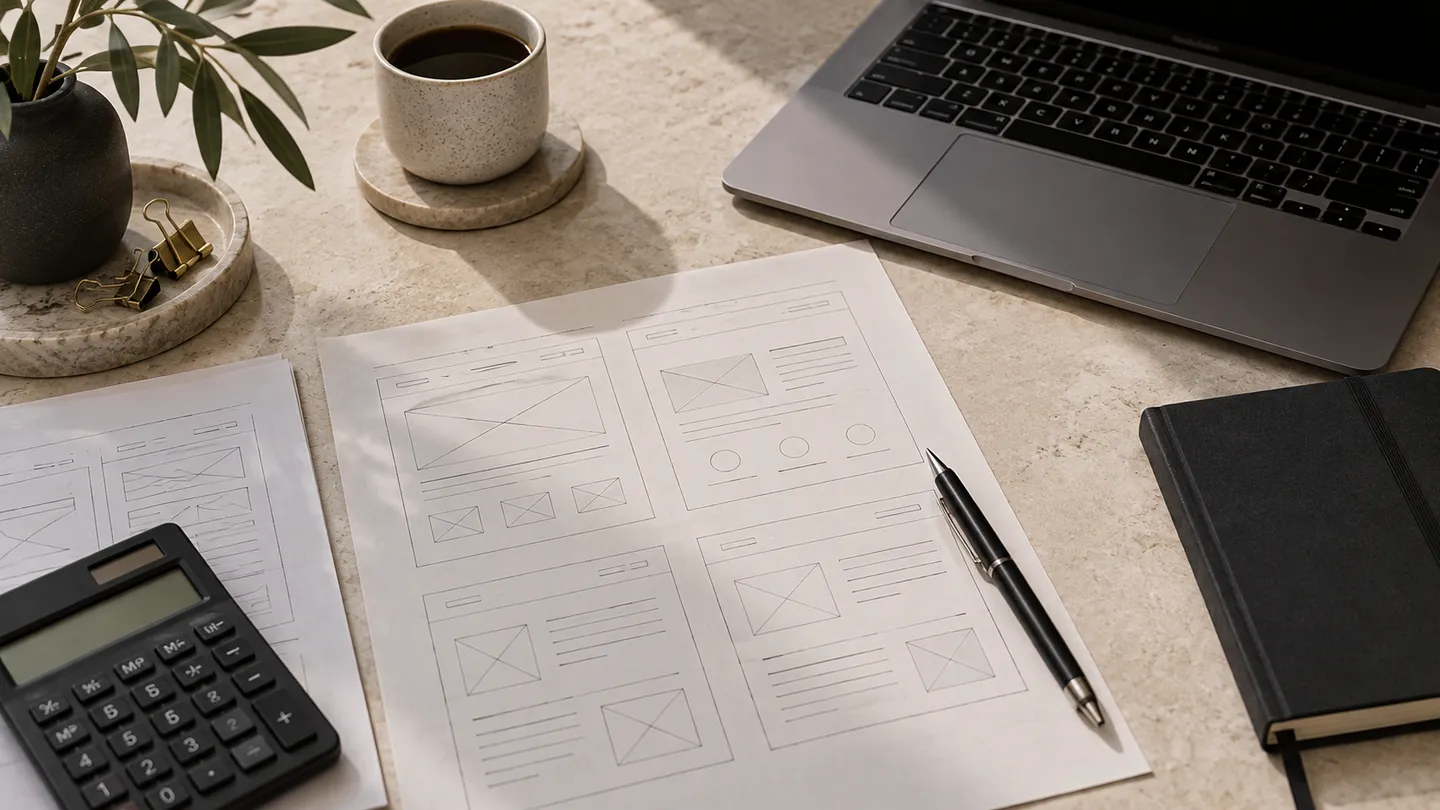
A portfolio should help you judge how the designer solves problems similar to yours. Attractive screenshots are only the beginning. Inspect the live experience where available, the explanation of the work and the limits of the evidence. A mockup does not prove that the site was built, launched or maintained by the person showing it.
In this guide
Choose relevant examples
Look for a comparable customer task: a supplier quotation, a service enquiry, a catalogue or a store checkout. A website in your industry can be useful evidence, but a visually similar project with a completely different workflow may tell you less.
Ask the designer to identify the brief and their role. Did they create the visual design, write content, implement the site or maintain it? Separate a concept study from a launched client project and a team contribution from sole responsibility.
References: Biaway: selected work · W3C WAI: forms tutorial · W3C WAI: accessibility tutorials
Inspect more than the homepage
Open a service or product page and follow the intended next step. Examine navigation, content clarity, mobile layout, Arabic direction and image proportions. Check whether the page explains what the customer needs to know rather than relying on a striking opening animation.
Do not submit real enquiries to portfolio businesses simply to test a designer. Ask for a demonstration or authorized test environment when interaction would send a message or create an order.
Look for a reasoned project explanation
A useful walkthrough explains the problem, constraints, decisions and delivered scope. It does not need invented revenue figures to be valuable. If results are claimed, ask for the measurement period, baseline, source and the designer's actual contribution.
Biaway's work pages for Wazayn, Bunyady and Espolinsa can be reviewed as examples of presented project work. Read the documented scope and inspect the linked evidence; do not infer sales increases or features that the walkthrough does not claim.
Test the fit for Saudi customers
If your business serves Hofuf and Mubarraz in Al Ahsa, consider whether the portfolio shows clear service and contact information. For Dammam and Khobar, a quotation or delivery workflow may be relevant. For Riyadh and Jeddah, remote-service or store needs may matter. These depend on your actual operation, not city stereotypes. A Saudi Arabia portfolio should demonstrate appropriate Arabic and English treatment when your scope needs both.
Turn observations into questions
Create a short record for each example: relevant task, observed strengths, problems, claimed role and questions. Ask why a particular decision was made and how the designer would adapt it to your requirements. A thoughtful explanation can reveal more than a large gallery.
Choose evidence of dependable work and clear reasoning. Visual taste matters, but the site must also serve your customers and be maintainable after launch.
References: Biaway: selected work · W3C WAI: forms tutorial · W3C WAI: accessibility tutorials
How this guide was prepared
Prepared with AI assistance, with platform and accessibility claims checked against the primary sources below at publication. The planning frameworks are Biaway’s editorial recommendations. Examples labelled illustrative are not client stories or measured results. Platform features and requirements can change.
Your questions.
01Is a concept project useless?
No. It can show design thinking if labelled honestly. It should not be presented as a launched client result.
02Should I reject a designer whose old project changed?
Not automatically. Ask when the work was delivered and what changed later; live sites may be edited by other teams.