Hire a web designer or use a DIY builder for your Saudi business?
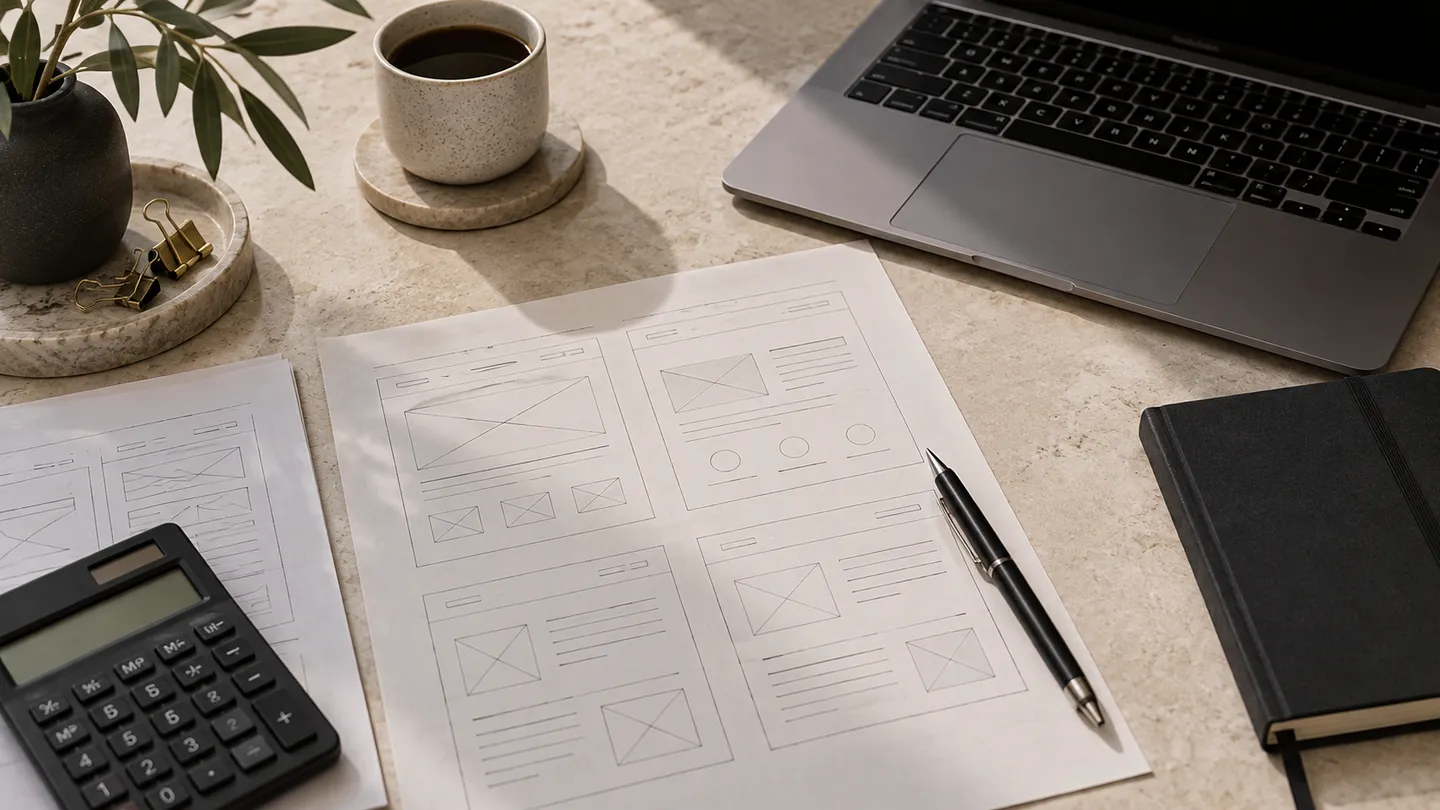
A DIY builder can be a sensible choice when the required site is simple and someone in the business can write, configure and maintain it. Hiring a designer can help when structure, presentation or implementation exceeds that capacity. Compare the finished outcome and ongoing responsibility, not just the subscription price against a project fee.
In this guide
Define the same finished result
Write the pages, languages, customer actions and necessary integrations for both options. Include content preparation, image rights, mobile behavior, accessibility, forms and ownership. A comparison is misleading if the DIY estimate assumes finished copy while the designer's quote includes writing it.
Identify non-negotiable needs before choosing a platform. If the business requires a particular checkout, booking workflow or data export, verify support rather than assuming every builder can deliver it.
References: MDN: responsive web design · W3C WAI: accessibility tutorials · Biaway website design packages
Calculate the owner's work
Estimate the time to learn the system, choose a structure, prepare content, build pages, test and correct problems. Use a realistic internal cost or opportunity-cost assumption. Keep that assumption visible; it is not a market rate.
Illustrative exercise: if setup takes 20 staff hours and the business values that time at SAR 60 per hour, the time component is SAR 1,200 before subscriptions and other work. These numbers are hypothetical and should be replaced with your own circumstances.
Compare flexibility and maintenance
A builder can make routine editing convenient, but capabilities, plan limits and export options vary. A custom implementation can provide a tailored result, but someone must maintain the code and integrations. Neither label guarantees easy ownership.
Ask who can change a service, replace an image and recover from an error after launch. Test those tasks before deciding. A beautiful site that only one unavailable person can update may be a poor operational fit.

Test the Saudi and bilingual requirements
Use actual Arabic and English content in a small prototype. Check reading direction, headings, phone links and forms. For Hofuf and Mubarraz in Al Ahsa, include real service conditions; for Dammam and Khobar, confirm relevant delivery details. For Riyadh and Jeddah, describe remote or shipping arrangements. A Saudi Arabia website needs this accuracy regardless of who builds it.
Choose a hybrid when it fits
You can prepare facts and images internally while hiring help for structure, visual design, implementation or testing. Alternatively, hire a designer to configure a builder the business will maintain. Put the division of work and acceptance criteria in writing.
Select the option that produces a complete usable site within your time, budget and maintenance capacity. Revisit the decision when the business needs change, rather than assuming DIY or professional design is always superior.
References: MDN: responsive web design · W3C WAI: accessibility tutorials · Biaway website design packages
How this guide was prepared
Prepared with AI assistance, with platform and accessibility claims checked against the primary sources below at publication. The planning frameworks are Biaway’s editorial recommendations. Examples labelled illustrative are not client stories or measured results. Platform features and requirements can change.
Your questions.
01Is a DIY website unprofessional?
Not inherently. Its quality depends on content, design, implementation and maintenance, not simply the tool used.
02Will hiring a designer remove my workload?
You still need to confirm business facts, supply or approve assets and make decisions. The scope should show what the designer takes on.