How to evaluate your finished website's quality in Saudi Arabia
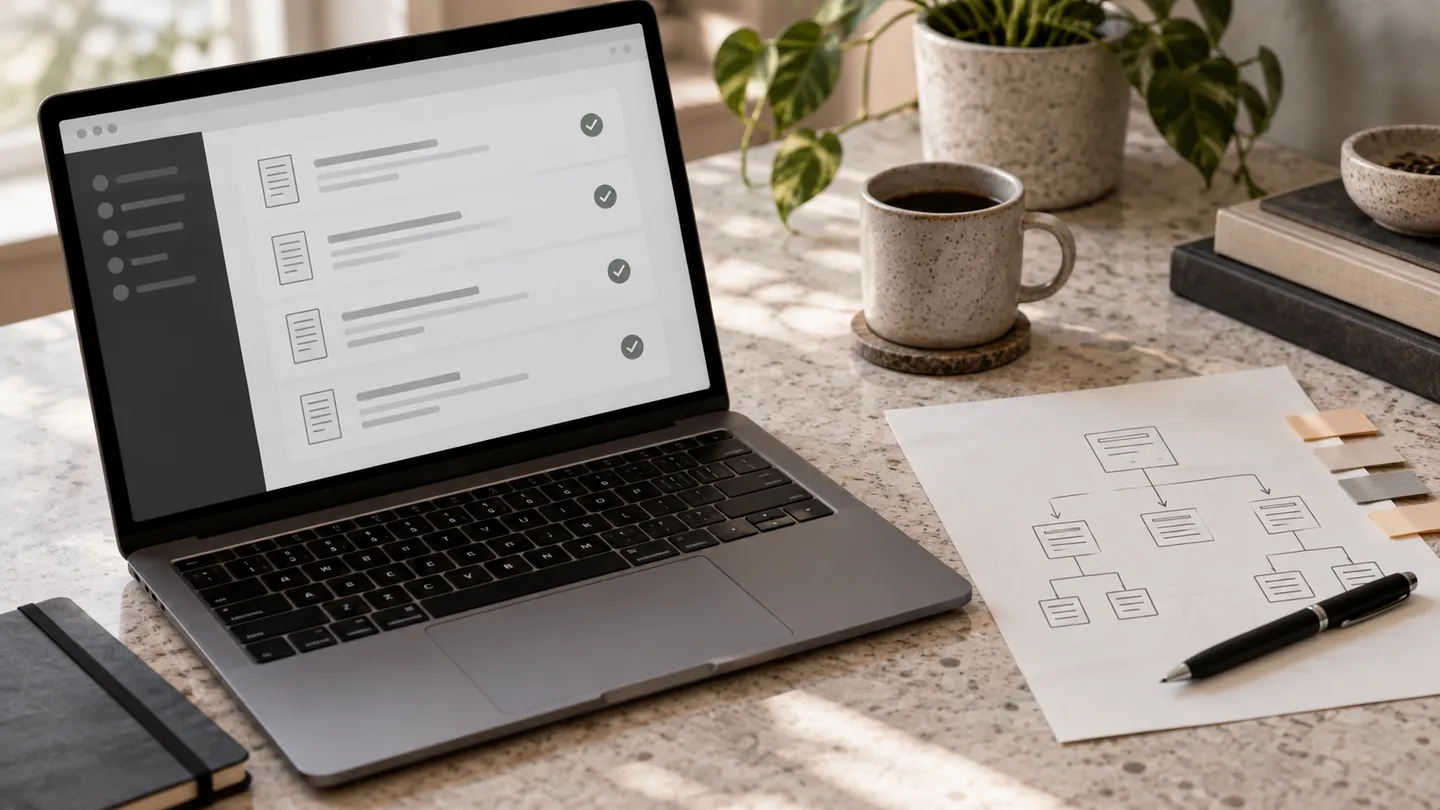
Judge a finished website by whether customers can understand and use it, whether its information is accurate and whether the business can maintain it. Visual polish is one part of quality. A repeatable acceptance review gives you more useful evidence than a single performance score or a quick look at the homepage.
In this guide
Start with representative tasks
Choose tasks that match the site: compare a service, request a quotation, find a specification or complete a supported purchase test. Ask someone unfamiliar with the design to attempt them and record where they hesitate or fail. Use authorized test data and avoid unnecessary real customer information.
Define success in observable terms. A form that looks good is not complete evidence; verify validation, the confirmation message and receipt at the agreed destination.
References: W3C WAI: preliminary accessibility checks · W3C WAI: forms tutorial · web.dev: Web Vitals · Google Search Console: URL Inspection
Review content and credibility
Check service scope, exclusions, prices where published, contact details and genuine portfolio material. Remove placeholders and conflicting promises. Review Arabic and English for equivalent facts and natural phrasing, including mixed-language names and numbers.
Ask whether a visitor can understand who provides the service and what happens after contacting the business. Do not rely on decorative badges, invented reviews or unsupported outcome claims to create trust.
Check usability and accessibility
Review a narrow mobile screen and a desktop view, keyboard navigation, visible focus, headings, labels and image alternatives. Look for clipped text, stretched pictures and controls that are difficult to identify. Basic checks help find problems but do not by themselves prove complete accessibility conformance.
Use a defect list with the affected page, reproduction steps and expected behavior. This helps the supplier repair a problem more reliably than feedback such as 'the mobile version feels wrong'.

Verify Saudi operating details
For actual coverage in Hofuf and Mubarraz within Al Ahsa, Dammam and Khobar, and Riyadh and Jeddah, check visits, delivery or remote arrangements against business practice. Test the contact information customers across Saudi Arabia will use. The site should distinguish a service area from a physical office and should not imply locations the business does not operate.
Assess technical readiness and handover
Review loading behavior with suitable tools and recognize the difference between controlled tests and available real-user measurements. Check important URLs, language links and the intended indexing settings. A live availability test is not proof that Google has indexed or ranked a page.
Finally, ask the owner to perform a routine edit and locate renewal, access and support information. Record remaining issues by effect on customers and launch readiness. A quality website combines reliable journeys, accurate information and manageable operation; no single score can substitute for those checks.
References: W3C WAI: preliminary accessibility checks · W3C WAI: forms tutorial · web.dev: Web Vitals · Google Search Console: URL Inspection
How this guide was prepared
Prepared with AI assistance, with platform and accessibility claims checked against the primary sources below at publication. The planning frameworks are Biaway’s editorial recommendations. Examples labelled illustrative are not client stories or measured results. Platform features and requirements can change.
Your questions.
01Is a perfect speed score necessary for a good website?
A score is diagnostic evidence, not the whole customer experience. Investigate meaningful loading problems alongside functionality, content and accessibility.
02Can I accept the site with minor issues?
Agree which issues are genuinely non-critical, their resolution plan and the acceptance terms. Do not classify a broken core journey as a minor visual detail.