When is it time to move from Instagram DMs to an online store?

You do not need a store just because another seller has one. Add a structured checkout when repeated questions, order errors or delivery coordination are consuming time or making the customer’s next step unclear. This guide helps Saudi sellers judge that change from their actual order workflow, then prepare a small, testable launch.
In this guide
Start with the work your current order path creates
Instagram can be a sensible place to test an offer, show products and answer early questions. A separate store becomes worth evaluating when a customer cannot reliably move from seeing an item to understanding its price, availability, delivery terms and next step. The signal is not a magic number of followers or products. It is repeated operational friction that the business can describe and measure.
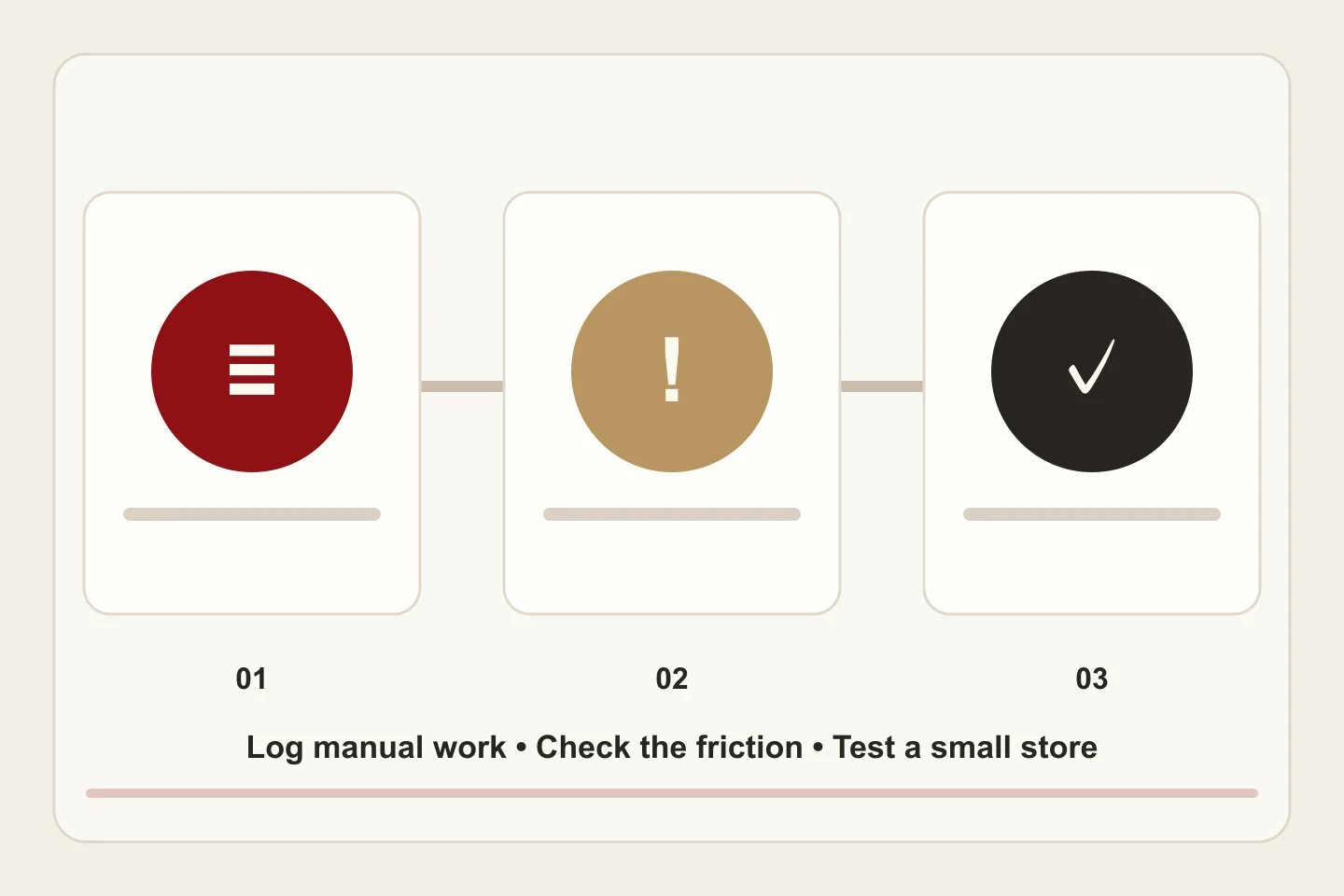
For one week, note where each genuine order begins and what the seller must do before it is ready: confirm a variant, check stock, repeat the total, record an address, arrange payment, set delivery expectations and confirm the order. Count corrections, unanswered messages and orders that need follow-up. This small log is a better starting point than assuming a website automatically creates demand.
Keep Instagram for discovery; choose checkout for operations
A social profile can introduce a product and bring people into a conversation. Direct messages can remain practical while the range is small, requests are irregular and the owner can confirm every detail without delaying customers. There is no need to abandon a channel that already helps people discover the business.
A store gives the business a structured place for product information and, when the selected platform and integrations support it, a catalogue, cart, checkout and order record. It also creates work: accurate product data, stock updates, customer service, platform costs and maintenance. Before promising an automated step, confirm which system actually performs it and who owns exceptions such as unavailable stock, a failed payment or a delivery change.
Use a readiness checklist, not a follower threshold
Score the operational case using evidence from recent orders. A single problem may be enough to justify a small store pilot; several weak signals do not prove that a larger build will pay for itself. The checklist below is a planning aid, not a validated industry benchmark.
Scroll the table sideways to read every column.
| Signal | What to record | Practical next step |
|---|---|---|
| Repeated questions | How often people ask the same price, size, availability or delivery question | Write accurate answers once in the product information |
| Manual order handling | Time spent copying details and confirming totals | Map the current steps and identify what a platform can actually handle |
| Order errors | Missed messages, wrong variants, duplicate entries or stock corrections | Choose one reliable source of truth for product and order status |
| Customer friction | Where people stop because the next action or payment route is unclear | Test the whole path on a phone before expanding |
| Operational readiness | Product photos, truthful stock, delivery rules, support and return information | Fix missing policies or data before inviting more orders |
Estimate workload without inventing a sales forecast
Use a simple time exercise. In a labelled hypothetical example, a seller handles 12 orders in a week and spends an average of seven minutes per order repeating details or copying information. That is 84 minutes of this specific manual task. It is not a claim that a store will eliminate all 84 minutes: the owner still needs to answer questions, pack orders, update stock and resolve exceptions.
Compare the observed task time with the real cost and setup effort of the proposed platform. Add subscriptions, payment-provider charges, any transaction fees, product preparation and continuing maintenance from their current provider terms. If the workflow problem is occasional and cheap to handle, keep Instagram and improve the response template. If repeated errors or slow confirmations matter, pilot only the catalogue and checkout flow you can operate well.
Prepare product information, customer policies and owners
Before setup, collect a clean product sheet: approved names, actual prices, options, stock status, useful photographs, delivery dimensions where relevant, and the person authorised to approve each fact. Decide whether the Arabic and English descriptions convey the same offer, not just similar-looking translations. Test price, variant, cart, payment result and customer notification with the platform's permitted test process before accepting real orders.
The Saudi Ministry of Commerce's published e-store evaluation describes customer-facing standards that include a secure, usable site, contact channels, return and refund information, privacy, shipping and delivery information, and required business details. Use the current Ministry guidance for your own obligations and verify any licence, registration or tax question with the appropriate official service; a design agency is not a legal adviser. Name who answers complaints and updates each policy after launch.
References: Saudi Ministry of Commerce: evaluation standards for e-stores · Saudi Ministry of Commerce: merchant guide to rights and obligations
Make delivery rules match the places you really serve
A seller in Al Ahsa might test pickup or a stated local delivery process around Hofuf and Mubarraz, then separately confirm whether the business can ship to Dammam and Khobar. A seller taking orders from Riyadh or Jeddah needs accurate carrier coverage, delivery estimates and fees before those destinations are offered. These are examples of planning actual service zones, not claims that every merchant serves every city.
Record the same practical boundaries for a Saudi Arabia-wide offer: accepted addresses, excluded destinations, handling time, delivery provider and what happens when a parcel is delayed. Biaway delivers website work online; that does not mean it has a branch in each of these places or controls a merchant's logistics. The store owner supplies and approves service-area facts, and the website should present them consistently in Arabic and English.
Launch a small test and keep Instagram connected
Start with a manageable group of products and one complete customer journey. From an Instagram post or profile, open the correct product page on a phone, check its current price and stock, choose any option, review delivery terms, finish the permitted test checkout and confirm what the seller receives. Ask another person to try the flow without verbal help. Fix confusing copy and missing states before linking a wider catalogue.
If organic product discovery matters, accurate product pages can help Google understand what each item is. Google documents Product structured data and Merchant Center feeds as ways of sharing product information, but eligibility or markup does not guarantee a special search appearance, ranking or sale. Keep product data consistent and measure actual qualified enquiries and completed orders separately from profile visits or clicks.
References: Google Search Central: product structured data
Choose implementation help by the work you need
A ready-made platform may suit a straightforward catalogue and checkout. A custom implementation is more relevant only when you have a specific requirement that the available platform and supported integrations cannot meet. Before hiring, ask for the product limit, languages, payment and delivery setup, test coverage, training, account ownership, monthly charges and what happens when a provider feature changes.
Biaway's website-design service describes its online-store work and current scope; review that page and ask for a written fit check before commissioning anything. The e-commerce setup, any third-party subscription and ongoing store administration are separate responsibilities. Ask the provider to identify the owner of each one, then choose the smallest version that solves a problem you have actually observed.
References: Biaway: website design and e-commerce scope
Plan store coverage across Saudi Arabia without overpromising
A seller serving Al Ahsa can define whether pickup or local delivery actually covers Hofuf and Mubarraz, then set separate carrier rules for Dammam and Khobar. For customers in Riyadh and Jeddah, show the real delivery areas, fees, handling times and exclusions before checkout. Keep Saudi Arabia-wide delivery claims limited to destinations confirmed with the chosen carrier.
These locations describe practical service-area decisions, not a claim that every shop serves every city. Biaway works online and can plan or build the store remotely; it does not claim local branches in Hofuf, Al Ahsa, Mubarraz, Dammam, Khobar, Riyadh or Jeddah, and it does not control the merchant’s fulfilment. The merchant approves the rules shown on the site.
How this guide was prepared
Prepared with AI assistance, with platform and accessibility claims checked against the primary sources below at publication. The planning frameworks are Biaway’s editorial recommendations. Examples labelled illustrative are not client stories or measured results. Platform features and requirements can change.
Your questions.
01How many products should I have before opening a store?
There is no universal product-count threshold. Consider whether customers can get accurate information and complete orders reliably, and whether the seller can maintain stock, policies and support.
02Should I stop using Instagram after I open a store?
Usually the channels serve different jobs. Instagram can help people discover products; the store can organise product details and checkout. Keep the social channel if it helps the business and link customers to the correct current product page.
03Will a store automatically bring Google traffic or sales?
No. A store creates pages and purchase workflows; traffic and sales depend on many factors. Accurate product information and supported structured data can help Google understand pages but do not guarantee rankings or sales.
04Can Biaway deliver online-store work to Al Ahsa, Riyadh or Jeddah?
Biaway works online. Discuss your requirements remotely and confirm the written scope; online delivery does not imply physical branches in those cities.