Which website work should you do yourself and which should you hire out?
You can reduce project cost and improve accuracy by doing the work your business is best placed to do. That usually begins with facts, priorities and approvals, not trying to learn every technical skill before launch. Divide the project by capability and risk, with a clear owner for each deliverable.
In this guide
Keep business facts and decisions internal
Prepare service descriptions, exclusions, prices, contact details, actual coverage and common customer questions. Identify approved projects and obtain permission for images or testimonials. Only the business can reliably confirm whether a claim reflects its operation.
Choose one approver for final factual decisions. Multiple uncoordinated instructions can cause rework and contradictory Arabic and English pages even when the designer is capable.
References: W3C WAI: images tutorial · W3C WAI: forms tutorial · Biaway website design packages
Prepare useful materials without overdesigning
Organize logo files, licensed images, product information and draft copy in a clear folder. Label what is final and what needs review. Give references with reasons, such as a readable service comparison or a clear mobile menu, rather than copying a competitor's content.
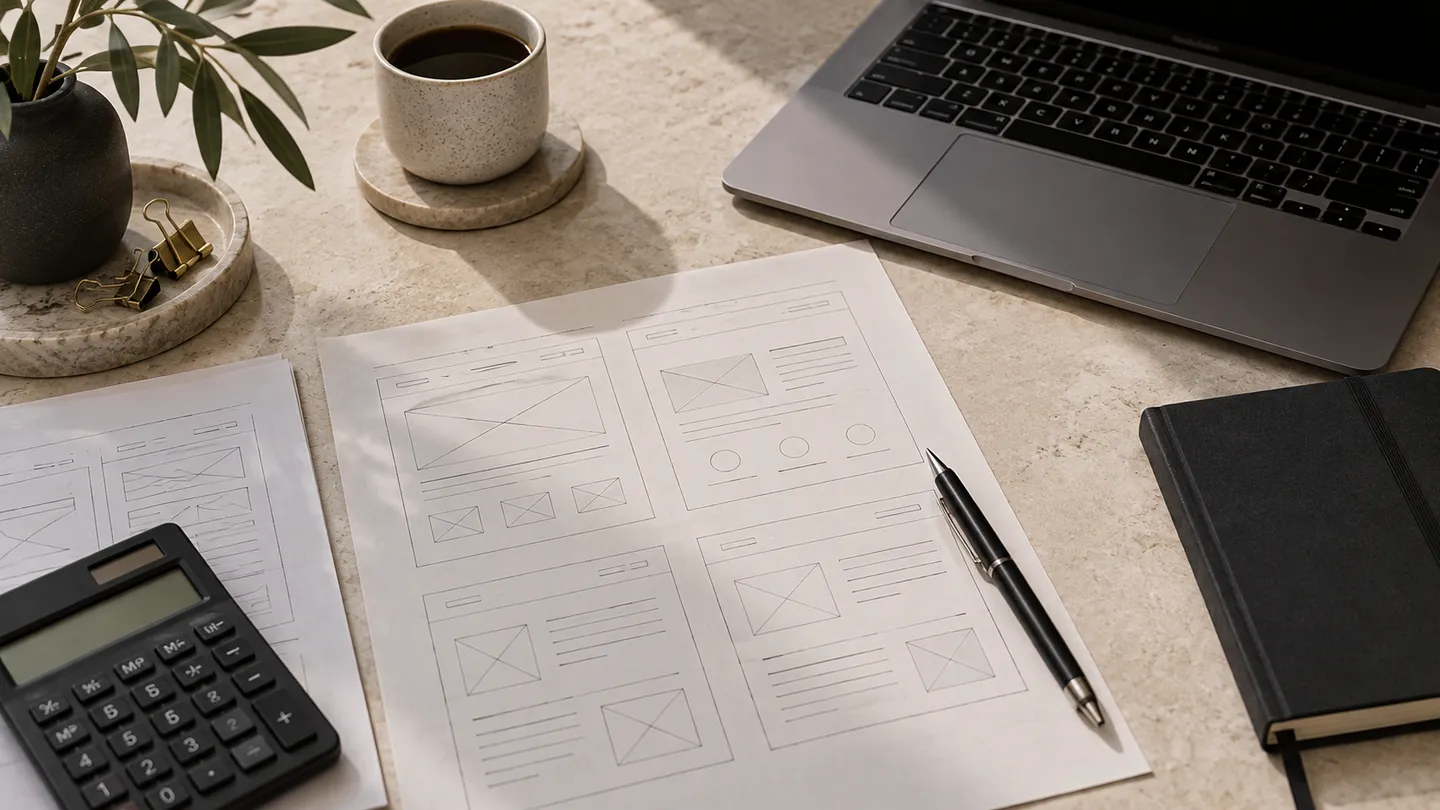
You can sketch the desired customer journey without dictating every pixel. Leave room for the designer to improve hierarchy and usability while preserving the required business outcome.
Delegate tasks that need specialist verification
Complex responsive layouts, accessibility implementation, form delivery, payment integration and migrations may require skills the business does not have. Describe the expected behavior and ask the specialist to propose implementation and tests.
Avoid splitting a tightly connected task across providers without coordination. If one person designs a form and another implements it, name who owns the final labels, validation, delivery and acceptance.

Use the owner to confirm Saudi service conditions
The business should specify service in Hofuf and Mubarraz within Al Ahsa, conditions for Dammam and Khobar and remote or shipping arrangements for Riyadh and Jeddah. The designer can present those facts clearly, but should not guess them. Saudi Arabia coverage and Arabic terminology are part of the approved content, not filler the supplier invents.
Create a responsibility sheet
For each item, record the provider, input needed, approval owner, due date and acceptance check. Include copy, translation, images, design, code, hosting, domain, forms and handover as applicable. Mark tasks outside the agreement rather than leaving them to assumption.
Revisit the sheet when requirements change. The objective is a complete site with fewer gaps, not maximizing the amount the owner does personally. A small amount of well-prepared internal work can save more time than an unfinished DIY implementation that needs rebuilding.
References: W3C WAI: images tutorial · W3C WAI: forms tutorial · Biaway website design packages
How this guide was prepared
Prepared with AI assistance, with platform and accessibility claims checked against the primary sources below at publication. The planning frameworks are Biaway’s editorial recommendations. Examples labelled illustrative are not client stories or measured results. Platform features and requirements can change.
Your questions.
01Can I supply my own draft text?
Yes. Ask whether editing and adaptation are included, and identify facts that must not change.
02Should I buy images myself?
You can, but confirm the required format, quality and usage rights before purchase. Keep licence records with the project.